



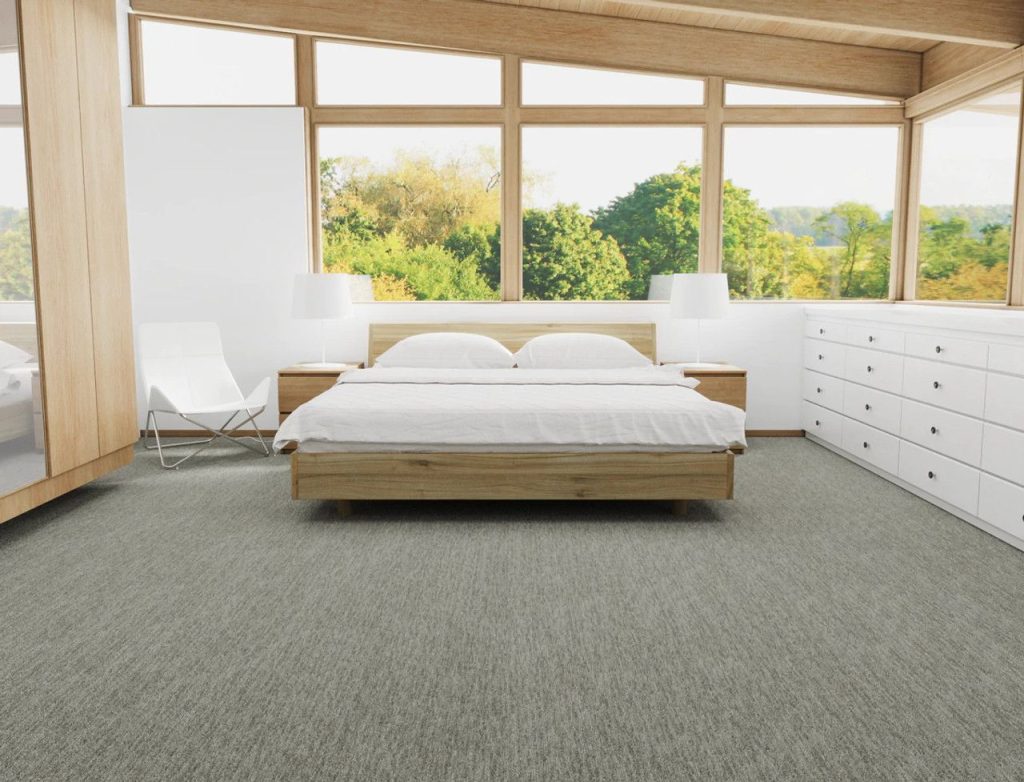
Yes, carpet is one of the most naturally insulating flooring options available. The fibers and padding trap air pockets that slow heat transfer in both directions — retaining warmth in winter and buffering heat rising through concrete slabs in summer. Research suggests carpet delivers energy savings of 8–13% compared to hard surface floors.
Quick Facts
- Carpet and cushion combinations reach a total R-value between 0.5 and 4.0 depending on pile thickness and pad density
- Multiply carpet thickness in inches by 2.6 to estimate its R-value
- Uninsulated floors account for 10–20% of heat loss from a room — carpet directly addresses that
- Most Texas homes sit on concrete slabs with near-zero insulation value, making carpet one of the most practical thermal upgrades available
Where It Makes the Most Difference
- Bedrooms over concrete slabs — carpeted rooms hold conditioned temperature longer, reducing HVAC cycling
- Upstairs spaces in summer — carpet buffers heat rising through the floor at night; see how carpet performs in Texas heat
- Homes weighing flooring options — our carpet vs. vinyl comparison covers comfort and efficiency side by side
- Any room where energy bills are a concern — the full case for carpet includes noise, safety, and comfort too
Installing carpet over a concrete floor is fast and straightforward. Our Texas team brings samples to you with no showroom trip required.
The thicker the carpet, the better it insulates. Pile height matters more than fiber type, according to a Georgia Institute of Technology study cited by the Carpet and Rug Institute’s thermal values research. A quick rule of thumb: multiply your carpet’s thickness in inches by 2.6 to estimate its R-value.
Why Does This Matter Especially in Texas?
Most Texas homes, particularly across the Dallas-Fort Worth area, Austin, and Houston, are built on concrete slab foundations. Concrete is not an insulator. It absorbs and transfers temperature quickly, which means it pulls heat away from your home in winter and radiates heat upward in summer.
The U.S. Department of Energy explains that uninsulated floors can account for 10-20% of heat loss from a room. In Texas, that’s a double problem because your HVAC system is already working harder during the long, hot summers. Every bit of thermal resistance at the floor level reduces the strain on that system.
Hard floors like tile, hardwood, and vinyl conduct temperature rather than resist it. Carpet does the opposite. That’s why a tiled bedroom feels noticeably colder underfoot in January than a carpeted one at the same thermostat setting.
Does Carpet Help in Summer Too?
Yes, and this part surprises a lot of people. Carpet doesn’t just retain warmth in winter. It also slows the transfer of heat upward through the floor in summer. Texas slabs absorb daytime heat, and without insulating flooring on top, that stored heat radiates into the room at night, making your AC work overtime.
A carpeted floor creates a buffer. Your feet stay comfortable, the room holds its conditioned temperature longer, and your system cycles less. That matters when you’re running your AC for eight or nine months out of the year.
You can read more about how carpet performs in Texas heat and why fiber choice plays a role in summer comfort.
What About Padding? Does It Make a Big Difference?
Padding is the other half of the equation. A thicker, denser pad adds significant insulation value on top of the carpet itself, and the R-values are additive. For example, a carpet with an R-value of 1.3 paired with a cushion rated at R-1.6 gives you a total floor R-value of 2.9.
Beyond insulation, quality padding protects the carpet backing and extends the life of the installation. It also improves comfort underfoot and adds sound absorption, which is a nice bonus. Our guide to carpet padding options covers the different types and what to look for based on your specific needs.
How Does Carpet Compare to Other Flooring for Energy Efficiency?
Straightforwardly, carpet wins. Hardwood and laminate have some thermal resistance but are still conductors compared to carpet. Tile and vinyl are at the bottom of the list and require thick underlayment to come close to carpet’s natural performance. Even then, they rarely match it.
The difference is most noticeable in bedrooms and living areas where you spend the most time. Carpeted rooms feel warmer at lower thermostat settings, which is exactly the outcome you want. The reasons for choosing carpet in a home include insulation, but also noise reduction, safety, and overall comfort, all areas where carpet outperforms hard surfaces.
Is Better Insulation Worth the Cost of New Carpet?
For most Texas families, yes. Carpet is one of the most cost-effective flooring upgrades you can make if energy efficiency is a priority. Unlike adding insulation inside walls or under a slab, which requires major construction, installing carpet over a concrete floor is straightforward and fast.
You’re also getting a complete package with carpet: carpet fiber options that hold up to traffic, padding that enhances both comfort and insulation, and transparent pricing that includes installation, padding, old floor removal, furniture moving, and cleanup. No hidden fees, no surprises.
Check out our guide to comparing carpet versus vinyl flooring if you’re weighing both options and want a closer look at how they stack up across comfort, maintenance, and cost.
Ready to See What's Right for Your Home?
If you’re in the Austin, Dallas, Fort Worth, Houston, San Antonio, or anywhere across Texas, CarpetNow makes it easy to get started. We come to you with samples, help you find the right carpet and pad for your specific goals (including energy efficiency), and handle the full installation in a single visit. There’s no driving to a showroom, no waiting weeks for a crew, and no pressure. Just honest advice and a straightforward process. Book a free in-home consultation and see what a difference the right flooring makes.
