


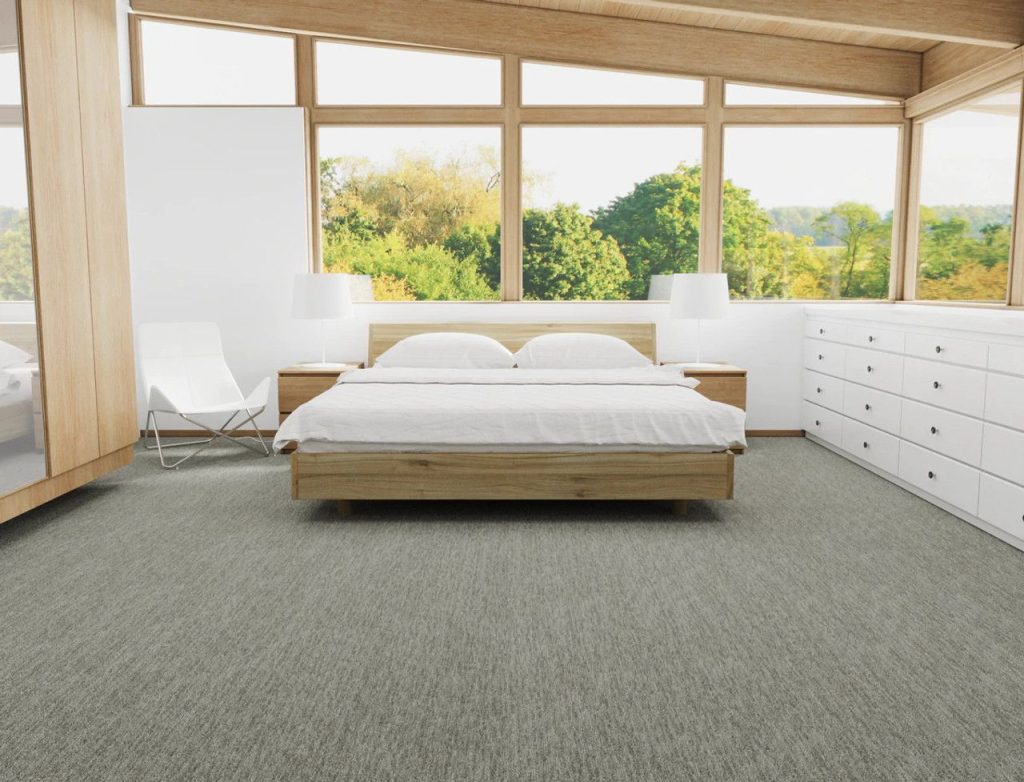
Carpet works best in bedrooms, game rooms, bonus rooms, media rooms, stairs, and upstairs hallways — basically everywhere except kitchens, living rooms, dining rooms, home offices, bathrooms, and entryways. Those hard-surface rooms deal with spills, heavy traffic, and rolling chairs. The carpet rooms are where your family sleeps, plays, and hangs out, and that’s exactly where carpet performs best.
Quick Facts
- Bedrooms are the top choice — carpet is warmer, quieter, and less expensive than hardwood or LVP
- Carpeted stairs are safer and quieter than bare wood or tile, especially in socks
- Media rooms benefit from carpet’s sound absorption — hard floors bounce audio around the room, carpet pulls it in — see our home theater carpet guide for details
- Not all rooms need the same carpet — stairs and hallways need denser, more durable fiber like nylon or high-quality polyester; bedrooms can go softer and plusher
- A quality carpet pad under bedroom and upstairs carpet creates a real thermal and cushion buffer between your feet and Texas concrete slab foundations
Best Rooms for Carpet
- Bedrooms — warm, quiet, comfortable, and budget-friendly compared to hard surfaces
- Game rooms and bonus rooms — kids can sit, sprawl, and play without hard floor wear
- Media rooms — absorbs sound reverberation so your speakers actually perform correctly
- Stairs and hallways — safer footing, quieter foot traffic, better wear than bare wood
- Guest rooms — a mid-range carpet with solid padding makes the space feel finished without overspending
The most practical setup for most Texas homes is carpet throughout the upstairs with hard floors on the main level. You get the comfort where it matters and the durability where it’s needed. If you want help mapping that out room by room, our Texas team brings samples to your home so you can see and feel every option in the actual space.
Pretty much every room in the house except the kitchen, living room, dining room, and home office. Those spaces tend to work better with hard surfaces because of spills, heavy foot traffic, and rolling desk chairs. But everywhere else? Carpet is the better choice for comfort, noise, warmth, and cost.
Let’s walk through the rooms where carpet makes the most sense and why.
Which Rooms Work Best with Carpet?
Bedrooms are the obvious starting point. You’re barefoot, it’s early, and the last thing anyone wants is a cold, hard floor under their feet at 6 a.m. Carpet is warmer, softer, and quieter. It’s also less expensive than hardwood or LVP, so you can outfit all your bedrooms without stretching the budget. For families with kids, carpet creates a safer play surface and cuts down on noise between floors.
Game rooms and bonus rooms are another easy call. These spaces see a lot of floor time, whether it’s kids playing, adults gaming, or the whole family hanging out. Carpet makes the floor usable. You can sit on it, your kids can sprawl across it, and dropped controllers won’t scratch or dent anything.
Media rooms benefit from carpet for a reason most people don’t think about: acoustics. Hard floors bounce sound around the room. Carpet and padding absorb it, which makes your speakers and surround sound actually perform the way they’re supposed to. If you’re building out a dedicated space, our home theater carpet guide covers everything from color choices to padding thickness. The Carpet and Rug Institute notes that carpet combined with quality padding significantly reduces sound reverberation and impact noise. That matters when you’re trying to watch a movie without echo.
Stairs and hallways are where carpet really earns its keep. Carpeted stairs are quieter, safer, and more comfortable than bare wood or tile. They give you a better footing, especially in socks, and they cushion the impact if someone takes a tumble. The CRI’s research on carpet for seniors specifically highlights that carpeted surfaces are more effective at preventing slips and cushioning falls than hard surfaces. That applies to kids, too.
Guest rooms and spare bedrooms often get overlooked, but they’re great candidates for carpet. A mid-range carpet with solid padding makes a guest room feel finished and welcoming without spending what you’d spend on hardwood.
What About the Rooms Where Carpet Doesn't Work?
The user’s question was really about where carpet is best, but it’s worth being honest about the rooms where hard surfaces win:
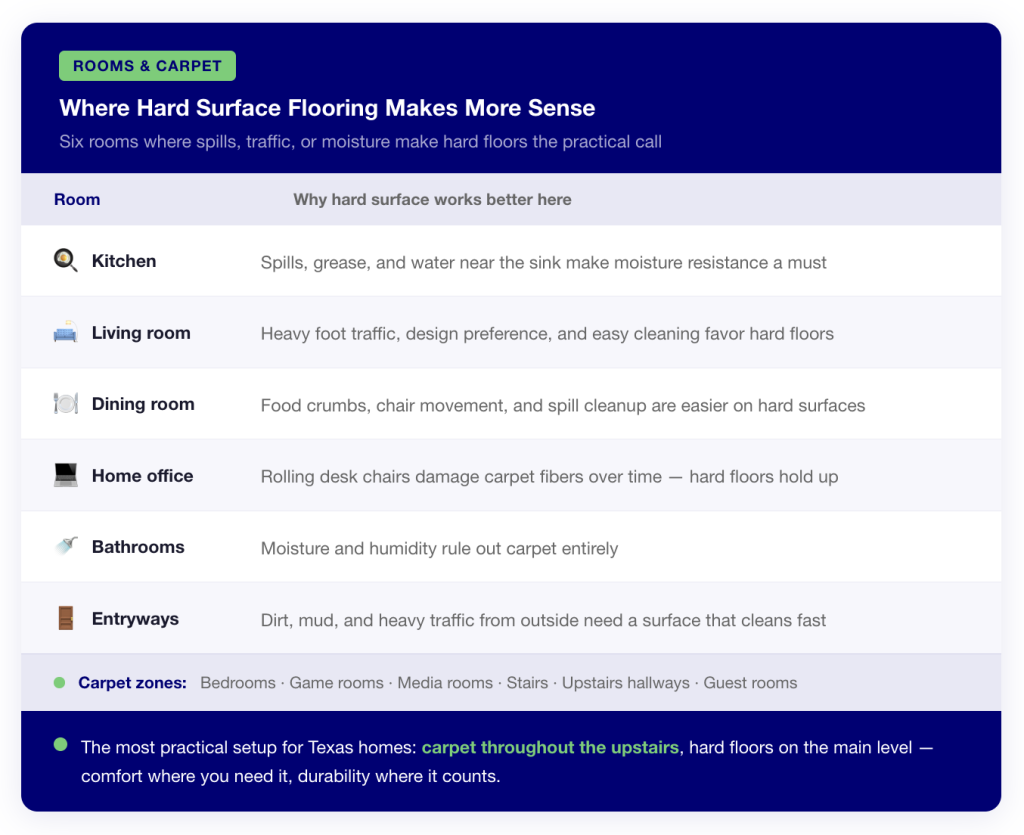
There’s nothing wrong with carpet in a living room. Plenty of people have it and love it. But the trend has moved toward hard surfaces in high-visibility, high-traffic areas, and there’s practical reasoning behind it. For the rooms listed above, hard flooring handles the daily wear better.
How Should I Think About My Whole House?
The simplest way to plan is to split your home into two zones:
Hard surface zones are your main-level common areas. Living room, kitchen, dining room, entryway, home office, and bathrooms. These see the most traffic, the most spills, and the most variety of use. Hard flooring handles all of it.
Carpet zones are your comfort areas. Bedrooms, upstairs hallways, stairs, game rooms, media rooms, bonus rooms, and guest rooms. These are where your family relaxes, sleeps, and hangs out. Carpet makes those rooms warmer, quieter, and more comfortable.
If you’re doing carpet throughout the upstairs and hard floors on the main level, that’s one of the most common and practical setups in Texas homes. It gives you the best of both worlds.
For Texas homeowners specifically, carpet on concrete slab foundations makes a huge comfort difference. The padding creates a thermal and cushion barrier between your feet and the slab, and it helps with energy efficiency, too. The U.S. Department of Energy notes that floor insulation contributes directly to reducing energy costs, and carpet’s R-value provides natural insulation that hard floors can’t match.
Does It Matter What Kind of Carpet I Choose for Each Room?
Not all rooms need the same carpet. Bedrooms are low-traffic, so you can go with a softer, more plush option without worrying about wear. Stairs and hallways are high-traffic areas and need something denser and more durable, like a nylon or high-quality polyester.
The EPA’s indoor air quality guide points out that carpet actually traps dust and allergens in its fibers, keeping them out of the air you breathe until you vacuum. The CRI’s cleaning and maintenance guidelines recommend vacuuming bedrooms once or twice a week to keep things fresh. That makes carpet a smart choice for bedrooms where air quality during sleep matters most.
Ready to Figure Out Your Carpet Plan?
We bring samples to your home and walk through each room with you. No guessing at a showroom. You see how the carpet looks and feels in the actual space where it’ll be installed. Schedule a free in-home consultation, and we’ll help you build a plan that makes sense for your home.
