

Carpeting your entire house at once is the most cost-effective approach and the best way to guarantee consistent color across every room. If budget requires it, phased installs work fine — but the one rule you can’t skip is carpeting all connected areas in the same project. Bedrooms and hallways that share visible transitions need to come from the same dye lot.
Quick Facts
- Carpet dyed in the same production run is called a dye lot — even slight batch differences can show up as a visible color shift between rooms
- Connected areas (bedrooms + hallway, for example) must always be done together to avoid a mismatch at transitions
- Disconnected areas like a finished basement or bonus room can safely wait for phase two
- Whole-house installs save on per-visit labor and setup costs
- Carpet color selection becomes simpler when you’re ordering everything from one batch
Best Approach by Situation
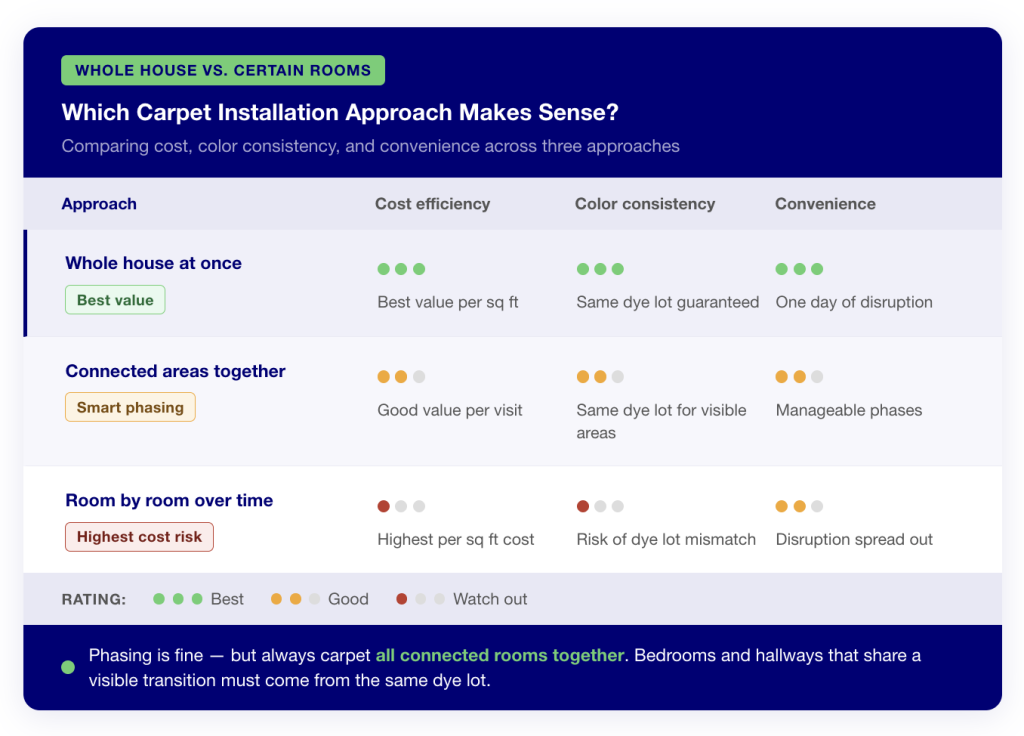
- Whole house at once — best value per sq ft, guaranteed dye lot match, one day of disruption
- Connected areas together — smart phasing when budget is a factor, no visible color risk at transitions
- Disconnected areas separately — basement, bonus room, or a separate wing can wait without any noticeable dye lot issue
Rooms That Make the Most Sense for Carpet
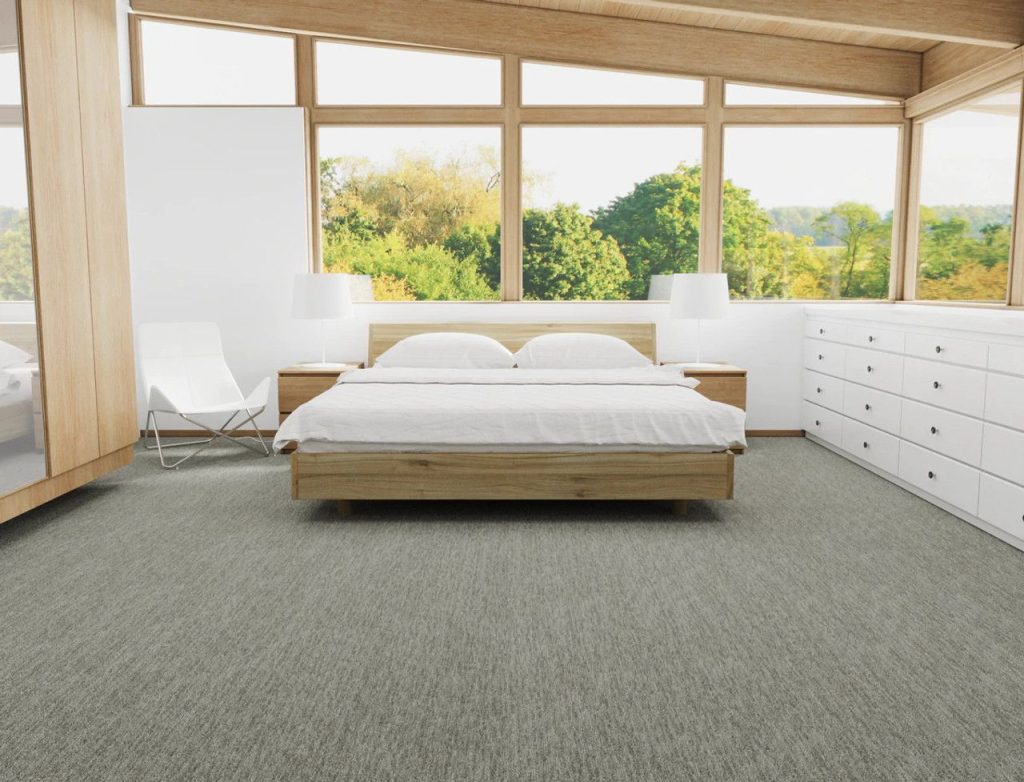
- Bedrooms — softer underfoot, helps with noise reduction between floors, adds warmth
- Hallways and stairs connecting bedrooms — always match these to adjacent rooms
- Living and family rooms — great for families with kids, cuts down on echo in open-concept layouts
- Media rooms and home offices — carpet absorbs sound and makes for a more comfortable home theater setup
Planning a phased project? Start with all your connected carpet areas in Phase 1, then circle back for any separate spaces in Phase 2. If you want help mapping out the most cost-effective installation plan for your home’s layout, our Texas team can walk through it with you when we bring samples to your door. And if you’re still deciding between carpet and hard flooring for certain rooms, our carpet vs. hardwood breakdown is worth a read before you commit.
Carpeting your entire house at once is the most cost-effective approach, and it avoids potential color matching issues between carpet installed at different times. That said, doing it in phases works too if your budget requires it. The key rule: always carpet all connected areas together. Bedrooms linked by a hallway, for example, should be done in the same project.
Why Is Doing the Whole House at Once the Best Option?
It comes down to two things: cost and consistency.
When you carpet an entire home in one project, you’re buying all your material from the same production run. That means every room gets carpet from the same dye lot, which is the batch of carpet dyed together at the factory. Carpet color can shift slightly between dye lots, so ordering everything at once eliminates the risk of a visible color difference between rooms.
From a cost perspective, doing everything at once also saves on labor. Your installers are already there with their tools, they’ve already moved the furniture, and they can work through the whole home efficiently. Splitting the same square footage into two or three visits means paying for setup and travel each time.
What If I Can't Afford to Do the Whole House at Once?
That’s completely fine. Plenty of homeowners carpet their homes in phases, and there’s a smart way to do it.
The most important thing is to do all the connected areas at the same time. If you have three bedrooms and a hallway upstairs, and they’re all visible from one another, that entire area should be one project. When carpet from the same dye lot flows through connected spaces, seams blend naturally, and the color stays uniform throughout.
If you have a separate carpet area that isn’t connected to the rest, like a finished basement, a bonus room, or a second-floor space with its own entry, that can absolutely wait for phase two. Since those rooms aren’t side by side with the carpet you already installed, a slight dye lot variation between batches won’t be noticeable.
What Exactly Is a Dye Lot and Why Does It Matter?
A dye lot is a batch of carpet that was dyed together during manufacturing. Even when a factory uses the same formula, subtle differences in temperature, humidity, and dye absorption can cause small color shifts between batches. The Carpet and Rug Institute notes that color variation between production runs is a normal part of textile manufacturing.
This matters most when two pieces of carpet from different dye lots end up next to each other, like in a hallway flowing into a bedroom. Side by side, even a small shade difference becomes obvious. But if those pieces are in completely separate areas of the house, nobody will ever notice.
Think of it like paint: if you paint two walls in the same room, you want the same can. But the guest bathroom and the master bedroom? A tiny variation between batches won’t register.
Which Rooms Benefit Most from Carpet?
Not every room in a Texas home needs carpet. Here’s where it makes the most sense:
Bedrooms are the top choice. Carpet is softer underfoot first thing in the morning, it reduces noise between floors, and it adds warmth. The Carpet and Rug Institute highlights that carpet’s insulating properties help maintain room temperature, which is a real benefit when Texas summers push AC systems to their limits.
Hallways and stairs that connect bedrooms are a natural fit, and they should always match the adjacent rooms. This is one of those connected areas where doing it all at once really matters.
Living rooms and family rooms work well for families with kids. Carpet gives little ones a softer surface to play on and helps cut down on the echo that hard floors create in open-concept Texas homes.
Media rooms and home offices are great candidates too. Carpet absorbs sound and creates a comfortable workspace or theater-like environment.
Kitchens, bathrooms, and entryways are typically better suited for hard flooring because of moisture and heavy traffic. The U.S. Department of Energy notes that flooring insulation plays a role in overall home energy efficiency, and carpet’s R-value makes it especially useful in rooms where comfort and temperature control matter most.
How Do I Plan a Phased Carpet Project?
If you’re going to do it in stages, here’s a simple way to think about it:
Phase 1: All connected carpet areas. This is usually the bedrooms and hallways on one floor, or the main living spaces. Get them done together so the color matches perfectly.
Phase 2: Any disconnected areas. Basement, bonus room, upstairs game room, or a separate wing. Since these don’t share visible transitions with Phase 1, a slight dye lot variation between the two orders won’t be a problem.
The EPA recommends proper ventilation when new carpet is installed to manage any off-gassing from fresh materials, so spacing out your project also gives you a natural break to air things out between phases. The CRI’s installation tips also suggest coordinating your installation timeline to minimize disruption while ensuring proper acclimation of materials.
If you’re going to do it in stages, here’s a simple way to think about it:
Phase 1: All connected carpet areas. This is usually the bedrooms and hallways on one floor, or the main living spaces. Get them done together so the color matches perfectly.
Phase 2: Any disconnected areas. Basement, bonus room, upstairs game room, or a separate wing. Since these don’t share visible transitions with Phase 1, a slight dye lot variation between the two orders won’t be a problem.
The EPA recommends proper ventilation when new carpet is installed to manage any off-gassing from fresh materials, so spacing out your project also gives you a natural break to air things out between phases. The CRI’s installation tips also suggest coordinating your installation timeline to minimize disruption while ensuring proper acclimation of materials.
Ready to Figure Out the Best Plan for Your Home?
Whether you’re carpeting the whole house or starting with one section, we can help you map out the smartest approach for your budget and your home’s layout. We bring samples to you, walk through the spaces together, and figure out what makes sense. You pick what works, and we handle the rest.
