


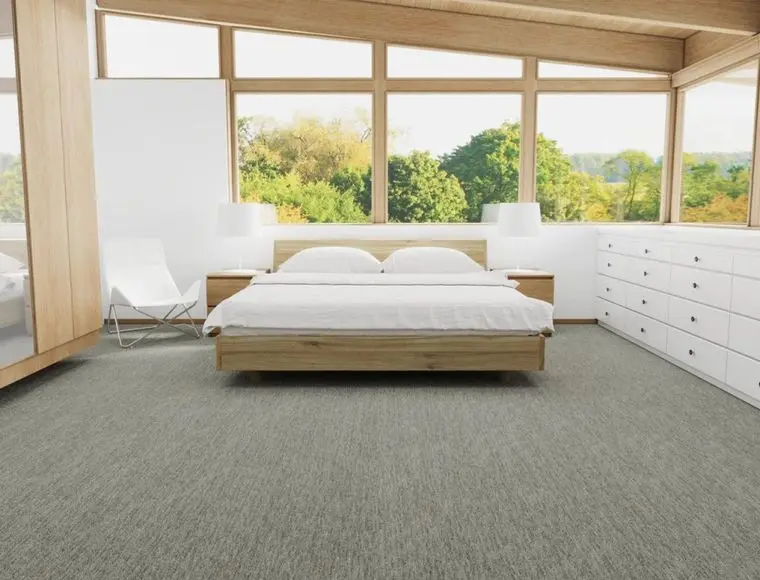
Rebond is the most widely installed residential carpet pad in the country, made from recycled polyurethane foam scraps bonded together under pressure. That distinctive multi-colored appearance is how you identify it, and it signals you’re walking on a sustainable, repurposed material. Rebond delivers solid density and support, holds up well under normal residential traffic, and costs less than specialty options like memory foam or rubber. The density rating—6 to 8 pounds per cubic foot—is what separates quality rebond from cheap pads that compress quickly.
Quick Facts
- Rebond is made from recycled foam from furniture manufacturing, shredded and bonded under heat and pressure
- Quality residential rebond runs 6 to 8 lb/ft³ density; anything below 6 lb/ft³ will feel flat within a couple years
- The CRI identifies rebond as a standard cushion type for residential cut pile and loop carpet
- At proper density, rebond maintains structure through 8 to 12 years of normal residential use without compression failure
- Stretch-in installation with rebond improves both comfort and acoustic performance compared to direct glue-down methods
Best For / Top Options
- Bedrooms, living rooms, and general living spaces — Quality 6–8 lb/ft³ rebond is the appropriate choice for typical residential rooms without specialty needs
- Budget-conscious homeowners — Rebond delivers solid performance at a price point that makes sense for most homes without overpaying for features specific rooms don’t need
- Environmentally minded buyers — Rebond’s recycled content makes it one of the more sustainable padding options available
CarpetNow stocks quality rebond across Austin, Dallas-Fort Worth, Houston, and San Antonio, and it goes under most standard residential installations. Always ask about density when evaluating pricing—6 to 8 lb/ft³ is the target. When a room warrants an upgrade to memory foam or moisture barrier, we’ll tell you. Schedule your free estimate and we’ll match the right pad for every room.
Rebond is the most widely installed carpet pad in residential homes across the country, and there’s a good chance it’s what you’re walking on right now without knowing it. It’s made from recycled polyurethane foam scraps, bonded together under pressure into a dense, multi-colored pad. That distinctive multicolored appearance is the easiest way to identify it, and it’s a sign you’re looking at a sustainable, repurposed material rather than virgin foam.
Where Does Rebond Come From?
The recycled foam that makes up rebond comes from manufacturing operations that produce furniture, seat cushions, and other foam products. Rather than sending the scraps and offcuts to a landfill, those materials are collected, shredded, and compressed under heat and pressure into a carpet pad.
The CRI’s guidance on sustainable carpet products notes that cushion products with recycled content are available across a range from small amounts up to 100% recycled material. Rebond sits at the high end of that recycled content range, making it one of the more environmentally responsible padding options available for standard residential use.
This origin story is also why Rebound has that characteristic swirled, multi-tone appearance. Each batch contains foam from different sources, resulting in a visually varied surface. It looks unusual to anyone who hasn’t seen it before, but the variation has no effect on performance.
Why Is Rebond the Industry Standard?
Rebond became the default residential carpet pad because it hits the right combination of density, durability, and price for typical home use. It provides solid support for the carpet above, holds up well under normal residential foot traffic, and costs less than specialty options like memory foam or rubber.
The Carpet and Rug Institute’s residential selection guidance names the bonded foam product commonly referred to as rebond as a standard cushion type for residential cut pile, cut-loop, and high-level loop carpet. The CRI’s residential installation standard also confirms that stretch-in installation with a proper cushion layer improves both comfort and acoustic performance, and rebond is the cushion that delivers those benefits at a price point most homeowners can work with. It’s the industry’s workhorse for a reason: it meets the performance requirements for most home installations without adding cost that most rooms don’t need.
For bedrooms, living rooms, dining areas, and general living spaces, rebond at the right density is the appropriate choice. You’re not leaving performance on the table by choosing it over a premium option in these spaces.
What Density Separates Good Rebond from Bad?
This is the question most homeowners don’t know to ask, and it’s the most important one when evaluating a rebond pad.
Density is measured in pounds per cubic foot, and it determines how well the pad maintains its structure over time. A low-density rebond pad compresses quickly under foot traffic and starts feeling flat within a couple of years. A properly dense rebond pad maintains its structure through years of normal use and continues protecting the carpet backing the way it should.
For quality residential rebond, the target density range is 6 to 8 pounds per cubic foot. The CRI’s FAQ on carpet cushion is clear that cut pile carpet should have a firm cushion, and the industry minimum for most residential applications is 6 pounds per cubic foot. Anything below that, and the pad begins to break down before it should.
| Density | Performance | Expected Lifespan |
|---|---|---|
| Below 6 lb/ft³ | Poor, compresses quickly | 2 to 4 years |
| 6 to 8 lb/ft³ | Good, standard residential | 8 to 12 years |
| 8 lb/ft³+ | High, used for Berber and heavy traffic | 12+ years |
When evaluating installed pricing, always ask what density rebond is included. A cheap pad at 4 or 5 pounds of density will feel comfortable on day one and feel flat within a few years. A quality rebond at 6 to 8 pounds holds up the way a carpet installation should.
When Should You Upgrade Beyond Rebond?
Rebond is not always the right answer. There are specific situations where a different pad type makes more sense, and a good installer will tell you which rooms warrant an upgrade rather than defaulting to one pad for every space.
Memory foam is worth considering for bedrooms and media rooms where underfoot comfort and sound absorption are the priority. It’s denser and more absorbent than rebond, and the difference is noticeable when you’re spending significant time in those spaces. Memory foam’s acoustic advantage over rebond is covered in our guide on carpet padding and soundproofing between floors.
Moisture barrier padding is worth the conversation for any room where pets spend time. Without a waterproof film layer, liquid accidents reach the subfloor and become a subfloor problem rather than a carpet problem. The CRI’s importance of carpet cushion guidance specifically flags moisture-resistant options as an important consideration for pet households.
High-density rebond or rubber makes sense for heavy-traffic corridors, stairs, and commercial installations where standard residential rebond would compress faster than it should. See our guide on choosing the right carpet for high-traffic areas for more on how pad and carpet work together in demanding spaces.
CarpetNow stocks quality rebond across Austin, Dallas-Fort Worth, Houston, and San Antonio. It’s what goes under most of our standard residential installs, and we carry it in the density range that holds up through the life of the carpet above it. When a room calls for something different, we’ll say so.
Schedule your free in-home estimate, and we’ll walk through the right pad for every room in your home.