


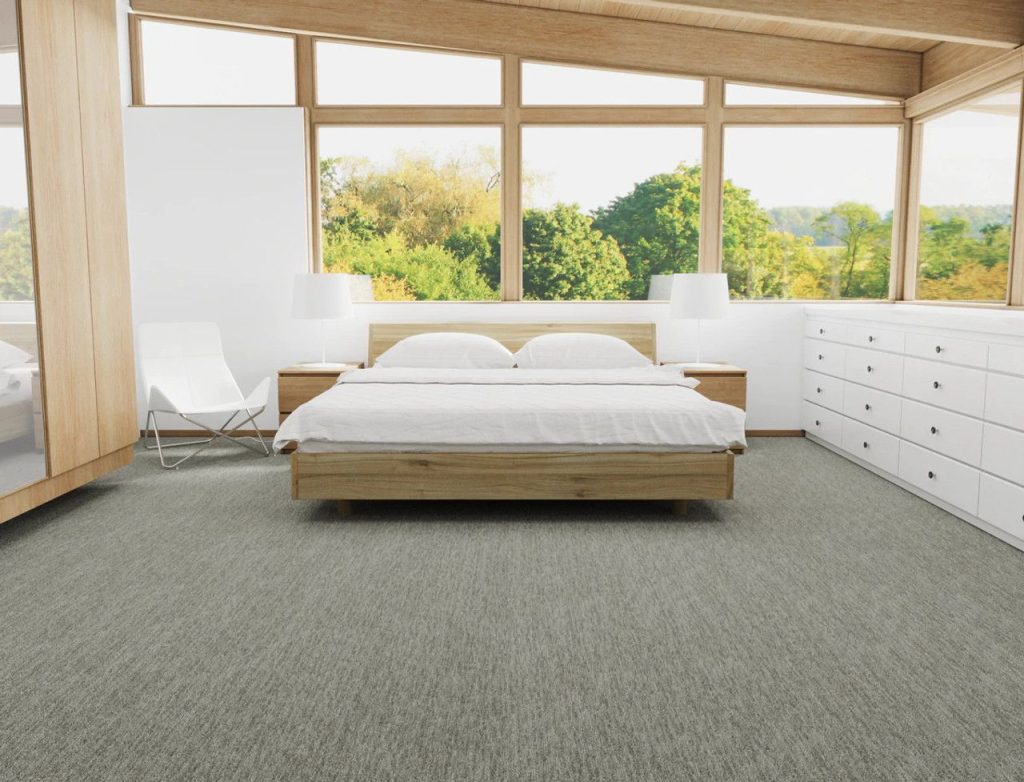
Carpet is a better fit for Texas homes than most people expect. Unlike hardwood, it doesn’t warp, buckle, or gap when humidity swings — a real and expensive problem with wood floors across the state. In air-conditioned bedrooms, game rooms, and media rooms, carpet holds a consistent temperature underfoot and performs reliably through both brutal summers and the occasional Texas cold snap.
Quick Facts
- Hardwood requires indoor humidity between 30–50% to stay stable — Texas summers routinely push outdoor humidity above 70%, causing cupping, gapping, and buckling
- Carpet fibers don’t conduct heat the way tile and concrete do — a carpeted floor in a cooled room feels comfortable rather than warm
- Polyester is naturally moisture-resistant and solution-dyed for fade resistance — a practical choice for sunny Texas rooms; nylon holds up better under heavy traffic
- A moisture-resistant carpet pad acts as a barrier between the carpet and concrete slab — worth prioritizing in Texas installations
- Carpet works best where it stays dry — bedrooms, game rooms, and living areas; avoid it in bathrooms, kitchens, and laundry rooms
Best Carpet Choices for Texas Conditions
- Polyester — naturally moisture-resistant, solution-dyed for fade resistance, easy to clean; see our carpet fiber comparison for the full trade-off breakdown
- Nylon — more durable under heavy traffic, treated with moisture and stain-resistant coatings; the better call for game rooms and high-use living spaces
- Carpet over LVP in bedrooms — LVP doesn’t insulate or absorb sound; our carpet vs. vinyl comparison covers where each option wins
- Any fiber paired with quality padding — learn more about how carpet handles Texas heat and what room conditions to factor in
Our Texas team brings samples to your home so you can find the right fit for your climate and your rooms.
Yes, and it’s often a better fit for Texas homes than most people expect. Carpet doesn’t warp, buckle, or gap when humidity swings, which is a real and expensive problem with wood floors across the state. In air-conditioned rooms like bedrooms, game rooms, and media rooms, carpet helps hold a consistent temperature underfoot and performs reliably through both the brutal summers and the occasional cold snaps that Texas throws at you. The key to keeping carpet in good shape in this climate is pairing the right fiber with quality padding and staying on top of routine maintenance.
Why Does Texas Humidity Hit Hard Floors So Hard?
Wood is a living material. Even after it’s milled and installed, it continues to absorb and release moisture based on what’s happening in the air around it. When humidity rises, wood expands. When the air dries out, it contracts. That cycle, repeated season after season in a Texas climate, puts real stress on hardwood floors.
The National Wood Flooring Association recommends keeping indoor relative humidity between 30-50% for hardwood floors to remain stable. Texas summers routinely push outdoor humidity above 70%, and homes without controlled humidity management can experience cupping, crowning, gapping, and buckling as a result. Repairing buckled hardwood is not a small job, and it often means replacing sections of flooring entirely.
Carpet sidesteps this problem completely. Carpet fibers don’t warp, they don’t gap, and they don’t require humidity monitoring to stay in good condition. If you’ve ever watched a neighbor deal with cupped hardwood floors after a wet Texas spring, you already understand the appeal.
Wood is a living material. Even after it’s milled and installed, it continues to absorb and release moisture based on what’s happening in the air around it. When humidity rises, wood expands. When the air dries out, it contracts. That cycle, repeated season after season in a Texas climate, puts real stress on hardwood floors.
The National Wood Flooring Association recommends keeping indoor relative humidity between 30-50% for hardwood floors to remain stable. Texas summers routinely push outdoor humidity above 70%, and homes without controlled humidity management can experience cupping, crowning, gapping, and buckling as a result. Repairing buckled hardwood is not a small job, and it often means replacing sections of flooring entirely.
Carpet sidesteps this problem completely. Carpet fibers don’t warp, they don’t gap, and they don’t require humidity monitoring to stay in good condition. If you’ve ever watched a neighbor deal with cupped hardwood floors after a wet Texas spring, you already understand the appeal.
Does Carpet Get Hot in the Texas Summer?
This is one of the most common misconceptions about carpet in a hot climate. Tile and concrete conduct heat, which means they absorb it and transfer it directly to whatever touches them. A tile floor in an un-air-conditioned room can feel significantly hotter than the air temperature because it’s radiating stored heat upward.
Carpet doesn’t conduct heat the same way. The fibers insulate rather than transmit, so a carpeted floor in a cooled bedroom feels comfortable rather than warm. In rooms that get good air conditioning, like bedrooms and living rooms, carpet helps maintain a more consistent, pleasant temperature at floor level throughout the day.
You can read more about how carpet handles Texas heat and what to consider when choosing fibers for rooms that see a lot of sun exposure.
What About the Rooms Where Carpet Doesn't Make Sense?
Carpet is well-suited for bedrooms, game rooms, media rooms, home offices, and living areas. These are the spaces where you spend time on the floor, want comfort underfoot, and benefit most from carpet’s thermal and acoustic properties.
Bathrooms, kitchens, laundry rooms, and entryways are a different story. Those areas see direct water exposure and benefit from hard, moisture-impermeable surfaces. Carpet works best where it’s kept dry, and keeping it dry in a bathroom simply isn’t realistic.
| Room Type | Carpet? | Why |
|---|---|---|
| Bedrooms | Great fit | Comfort, temperature consistency, quiet |
| Game rooms/playrooms | Great fit | Soft surface, noise reduction |
| Media rooms | Great fit | Sound absorption, comfort |
| Home offices | Good fit | Comfort, acoustics |
| Entryways | Not ideal | Heavy moisture/dirt exposure |
| Bathrooms/kitchens | Avoid | Direct water exposure |
Which Carpet Fibers Hold Up Best in Texas Conditions?
Not all carpet is equal when it comes to humidity and temperature performance. Two fiber types stand out for Texas homes.
Polyester is naturally moisture-resistant because it doesn’t absorb water into the fiber itself. It’s also solution-dyed in most cases, which means the color is locked into the fiber and resists fading from sunlight, a real factor in Texas rooms with big windows. Polyester is easy to clean, handles stain treatment well, and tends to be priced accessibly.
Nylon is the more durable option, particularly in high-traffic rooms. It’s not quite as naturally moisture-resistant as polyester, but modern nylon carpet is treated with stain and moisture-resistant coatings that more than compensate. For a game room or a heavily used living room, nylon holds its appearance longer under traffic.
A comparison of carpet fiber options covers the trade-offs in more detail if you’re trying to match the right fiber to a specific room.
Does Carpet Need Special Maintenance in Texas?
Nothing exotic. The same routine that works anywhere keeps carpet in good shape in Texas conditions.
Vacuum regularly, ideally once a week in higher-traffic areas. Texas homes deal with dust, pollen, and the grit that comes in from dry periods, so staying on top of vacuuming matters more here than in some other climates. Address spills quickly and blot rather than scrub.
The bigger maintenance consideration in Texas is padding. A moisture-resistant pad acts as a barrier between the carpet and the concrete slab beneath, which matters in humid conditions or if a spill ever gets through to the subfloor. It’s worth choosing the right pad for the installation rather than going with whatever is cheapest.
Our guide to carpet padding walks through the types available and what to look for based on your specific needs and climate.
How Does Carpet Compare to Other Flooring in Texas?
The most common comparison is carpet versus luxury vinyl plank, which has become popular in Texas because of its waterproof claims. LVP is a good option for wet areas. But in bedrooms and living spaces, it doesn’t insulate, it’s louder underfoot, and it conducts temperature rather than resisting it.
Our comparison of carpet and vinyl flooring goes into specifics on both options and helps you think through the right fit for each room.
The bottom line: carpet is not a type of flooring you need to avoid in Texas because of the climate. The state’s humidity is genuinely a problem for hardwood. For carpet, it’s manageable with the right fiber, the right pad, and basic maintenance.
Ready to See What Works for Your Home?
If you’re in Austin, Dallas, Fort Worth, Houston, San Antonio, or anywhere across Texas, CarpetNow makes it easy to explore your options without leaving home. We bring samples to you, help you identify the right carpet and pad for your specific rooms and climate conditions, and handle the full installation the same day. Book a free in-home consultation, and we’ll help you find something that holds up in Texas for the long haul.
