



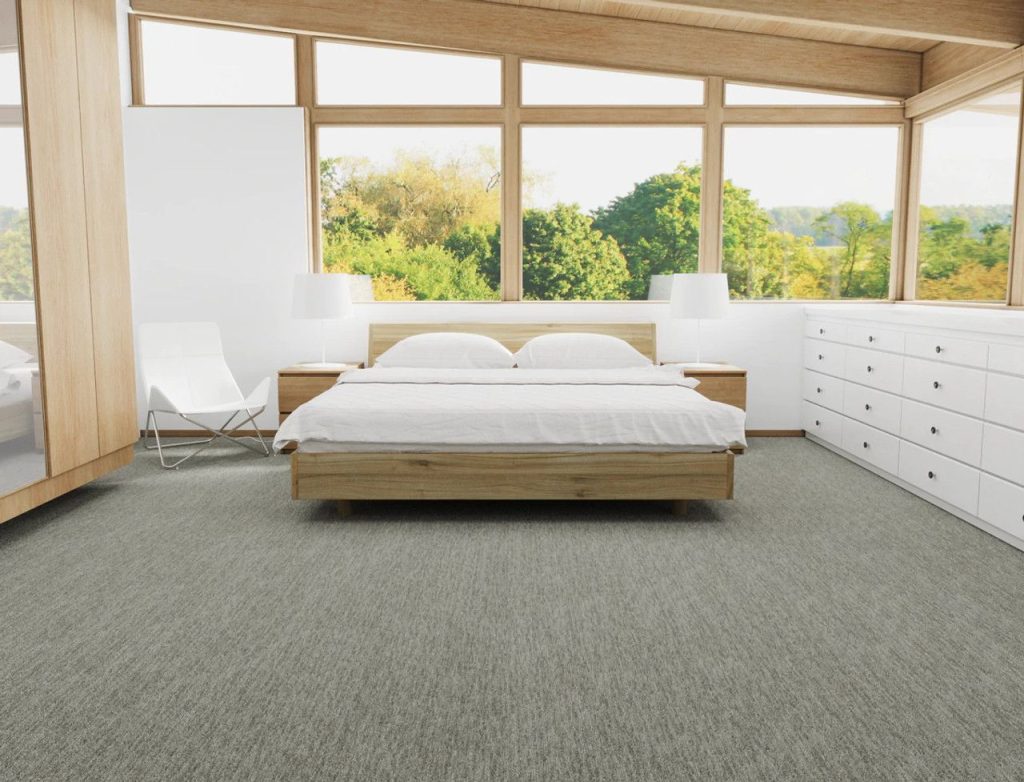
Carpet is one of the most effective ways to reduce noise between floors in a two-story home. The combination of carpet weight and pad density absorbs impact sound from foot traffic, kids, and everyday activity before it travels through the floor structure. It won’t eliminate all noise, but the difference, especially with an upgraded setup, is hard to miss.
Quick Facts
- Carpet and cushion combinations can reach an NRC (Noise Reduction Coefficient) of 0.7, where 1.0 = total absorption
- Carpeted floors can reduce impact noise by 20+ decibels compared to hard surfaces
- Upgrading from a 25 oz to a 55 oz carpet paired with memory foam padding makes a significant, noticeable difference
- Pad density matters as much as carpet weight — denser pads absorb more sound than thick, soft ones
- Two-story Texas homes with wood-framed second floors benefit more from carpet upgrades than concrete-slab construction
Where Carpet Makes the Biggest Difference
- Upstairs bedrooms and hallways with heavy foot traffic from kids
- Homes with a first-floor office or bedroom directly below active living spaces
- Wood-framed second stories, which carry more sound than concrete
- Any room where carpet padding can be upgraded alongside the carpet
- Texas homes where carpet insulation benefits do double duty on both sound and energy efficiency
The right carpet underlay type makes a bigger difference than most homeowners expect. If you’re already planning a carpet installation upstairs, pairing a heavier carpet with a denser pad is one of the smartest decisions you can make. And if noise reduction is your main goal, our Dallas-Fort Worth team can bring samples right to your door so you can see and feel the options before committing.
Yes, carpet is one of the most effective ways to reduce noise between floors in a two-story home. The combination of carpet and a quality pad absorbs impact sound from foot traffic, kids playing, and everyday activity, cutting noise transfer to the rooms below by a noticeable margin. It won’t make your upstairs completely silent, but the difference is real and immediate.
How Much of a Difference Does Carpet Actually Make?
Here’s something we hear from homeowners all the time: they replace their upstairs carpet with something thicker and denser, pair it with an upgraded pad, and the first night they notice the change.
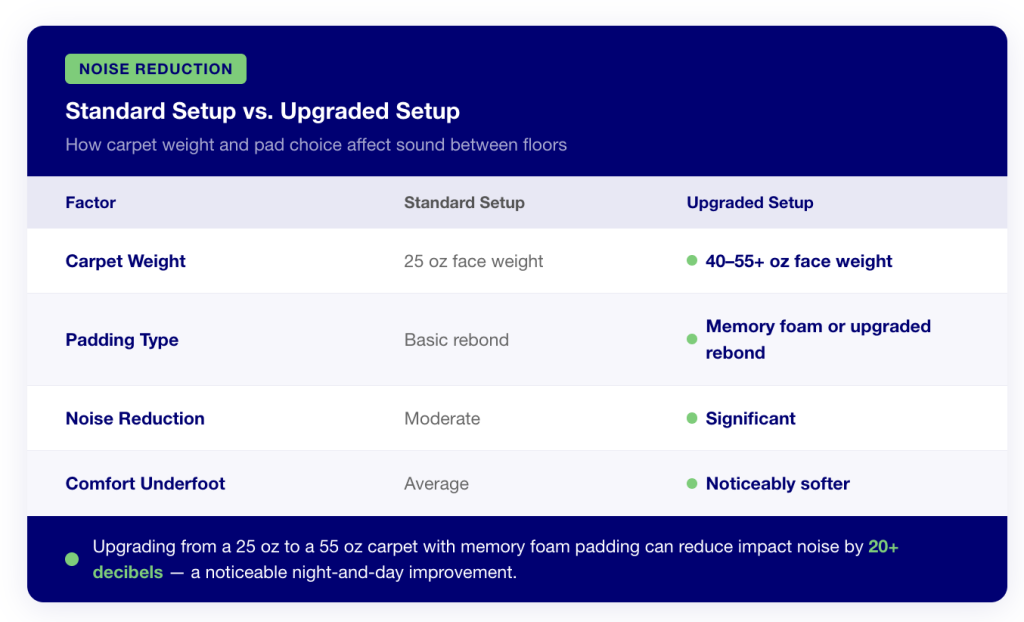
One of our team members experienced this firsthand. His upstairs had a 25-ounce carpet with standard padding. After upgrading to a 55-ounce carpet with memory foam padding, the difference was hard to ignore. Foot traffic from the kids upstairs went from constant thumping to a soft, barely-there hum. It wasn’t dead silent, but it was a night-and-day improvement.
That tracks with what the Carpet and Rug Institute has found in testing. Carpet and cushion combinations can achieve Noise Reduction Coefficient (NRC) values as high as 0.7, where 1.0 would mean total sound absorption. That’s a serious amount of noise control from something you’re already walking on.
Why Does Carpet Weight Matter for Noise?
Think of it like this: a thicker, denser carpet has more fiber to catch and absorb sound waves before they can travel through the floor. A 25-ounce carpet is perfectly fine for everyday use, but it’s not doing much heavy lifting when it comes to sound absorption.
When you move up to a 40- or 55-ounce carpet, you’re adding more material between the noise source and the floor structure itself. That extra density traps vibrations from footsteps, dropped toys, and all the other sounds that come with living in a two-story house.
According to the Carpet Institute of Australia, carpeted floors can reduce impact noise by over 20 decibels compared to hard surfaces. That’s the difference between hearing every single footstep above you and only catching the occasional heavy thud.
Does the Padding Matter as Much as the Carpet?
Honestly? The padding might matter even more. Your carpet pad is the unsung hero of noise reduction between floors.
A standard rebond pad does an okay job. But when you step up to a thicker, denser option, or go with memory foam, you’re adding a dedicated layer of sound absorption between the carpet and the subfloor. The U.S. Department of Energy notes that floor insulation plays a key role in overall home comfort, and carpet padding is a big part of that equation.
Here’s what to look for in padding if noise reduction is a priority:
- Density over thickness. A thinner, denser pad absorbs more sound than a thick, squishy one.
- Memory foam options. These conform to the subfloor and create a tighter seal against sound transfer.
- Moisture barrier backing. This adds another layer between floors, which helps with both sound and spill protection.
What About Two-Story Homes in Texas?
If you live in a two-story home here in Texas, noise between floors is probably something you’ve dealt with, especially with kids. A lot of homes in the DFW metro sit on concrete slabs downstairs with wood-framed second stories. That wood framing naturally conducts more sound than concrete, which means the right carpet and pad combination upstairs can make a bigger impact than you’d expect.
Texas summers also mean the AC is running hard, and carpet actually helps with energy efficiency, too. It’s doing double duty: keeping sound down and helping hold cooler air in.
The EPA has noted that carpet provides both acoustic benefits and can trap particles that would otherwise be airborne, which is a nice bonus if anyone in your family deals with allergies during Texas cedar season.
Is It Worth Upgrading Just for Noise Reduction?
If you’re already thinking about replacing upstairs carpet, upgrading the weight and padding for better noise control is one of the smartest moves you can make. You’re not adding a separate project or tearing into walls. You’re just making a better choice during a carpet installation you were already planning.
For families with kids, home offices on the first floor, or anyone who just wants a quieter downstairs, the upgrade pays for itself in peace and quiet. And honestly, the comfort difference underfoot is worth it on its own.
Ready to Hear the Difference?
If you’re in the Dallas–Fort Worth area, or anywhere we serve across Texas, we’d love to help you find the right carpet and pad combo for your home. We bring samples right to your door so you can see and feel the options in your own space. You pick what works, and we handle the rest. Schedule a free consultation, and let’s make your upstairs a whole lot quieter.
