



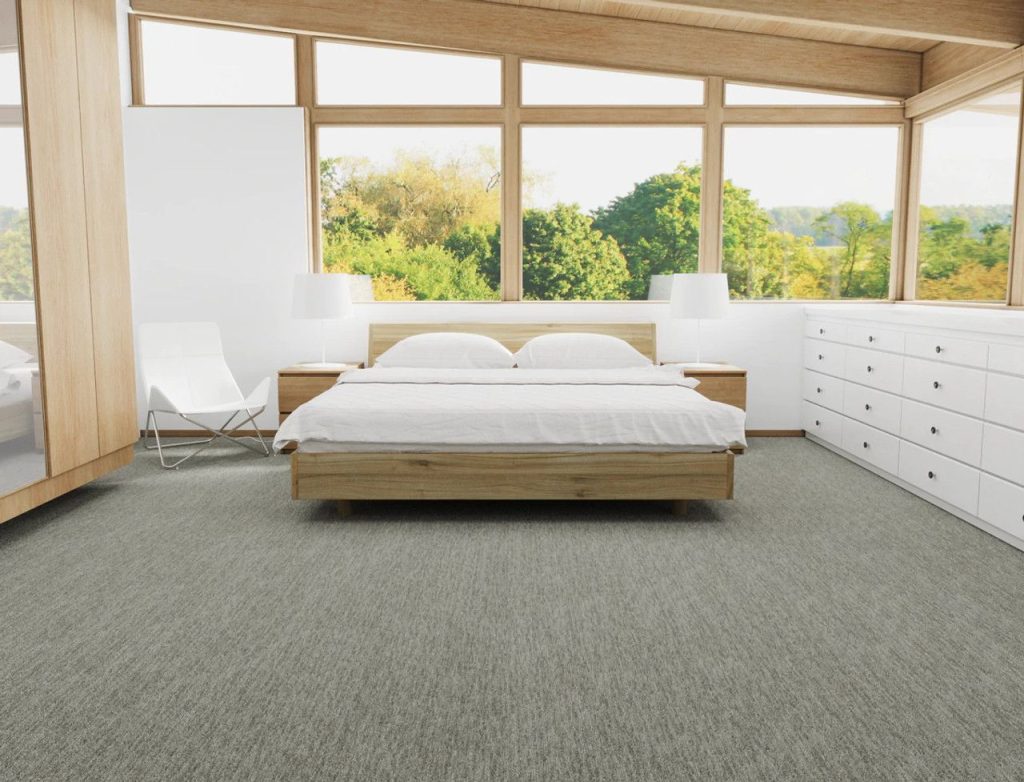
Carpet and hard flooring each do different things well, and most Texas homes work best with both. Carpet is warmer, quieter, softer underfoot, and costs significantly less than hardwood. Hard surfaces hold up better in high-traffic, high-spill areas like kitchens and dining rooms. The practical move for most families is to use hard floors on the main level and carpet in the bedrooms, game rooms, and upstairs spaces where comfort matters most.
Quick Facts
- Carpet installed with padding typically runs $2.75–$7 per sq ft; hardwood runs $8–$15+ per sq ft — carpet is roughly a third of the cost at the mid-range
- Carpet can reduce impact noise by up to 30 dB compared to hard surfaces — a dramatic difference in two-story homes
- Carpet’s thermal R-value is measurably higher than hard flooring, making it noticeably warmer on concrete slab foundations common throughout Texas
- For stairs, hallways, and game rooms, nylon holds up better and resists matting; for bedrooms, a softer polyester carpet in the 30–40 oz range is plenty
- Pairing any carpet with quality padding is the single biggest factor in how it feels underfoot and how long it lasts
Best Uses by Flooring Type
- Carpet — bedrooms, upstairs hallways, game rooms, stairs, media rooms, kids’ play areas
- Hard surface — kitchen, living room, dining room, entryway, home office, bathrooms
- Both together — main level in hard floors, upper level in carpet; best value and comfort split for most Texas homes
The math alone makes a strong case for carpet upstairs. On 1,200 sq ft of upper-level space, carpet can save $7,000–$11,000 compared to hardwood — without giving up anything in the rooms where your family actually spends most of their time. If you want to see how different carpet styles look next to your existing hard floors, our Texas team brings samples directly to your home so you can compare them side by side in your actual space.
The short answer is that each one does different things well, and most Texas homes work best with both. Carpet is warmer, softer, quieter, and significantly cheaper. Hardwood and hard surfaces hold up better in high-traffic areas and look great in the main living spaces. The smartest approach for most families is to use both: hard floors downstairs in the kitchen, living room, and dining room, and carpet in the bedrooms, game rooms, and upstairs areas.
Here’s what each one actually brings to the table.
Why Is Carpet the Better Choice for Comfort?
For active families, nothing beats spending time on the floor with your kids. Whether you’re playing board games, wrestling, or just sprawled out watching a movie on a Saturday morning, carpet is the surface that makes all of that comfortable. Hardwood doesn’t invite you to sit on it. Carpet does.
Beyond the family room floor, carpet is warmer underfoot. Its fibers trap air, creating a natural insulation layer that keeps the surface warm even on cold mornings. The Carpet and Rug Institute notes that carpet’s thermal resistance (R-value) is measurably higher than hard flooring, which means it holds heat rather than pulling it away from bare feet. In Texas, where most homes sit on concrete slabs, that warmth matters more than people realize.
Carpet is also quieter. It absorbs footsteps, dropped toys, and late-night bathroom trips. If your bedrooms are upstairs and your living room is directly below, the difference between carpeted and uncarpeted floors overhead is dramatic. The CRI reports that carpet can reduce impact noise by up to 30 dB compared to hard surfaces. That’s the difference between hearing every footstep and hearing almost nothing.
Where Does Hard Flooring Win?
Hardwood, LVP, and tile earn their place in the rooms that take the most abuse. Kitchens, living rooms, dining rooms, and entryways see heavy foot traffic, spills, food crumbs, and dirt tracked in from outside. Hard surfaces handle all of that better than carpet can.
Hard flooring also has a design appeal that most homeowners prefer in their main living areas. There’s a clean, polished look to hardwood or LVP that works well in open floor plans and high-visibility rooms. It photographs well for real estate listings, too, which is why the National Association of Realtors consistently ranks new flooring as one of the top improvements for resale.
Here’s how the two compare across the factors that matter most:

How Much Can You Actually Save with Carpet?
This is where the numbers get interesting. Carpet installed with quality padding typically runs $2.75-$7 per square foot in Texas. Hardwood flooring installed runs $8-$15+ per square foot depending on the species and finish. At the mid-range, carpet is roughly a third of the cost of hardwood.
For a practical example: if your home has 1,200 square feet of upstairs space (bedrooms, hallway, bonus room), carpeting that area might cost $4,800-$7,200. Hardwood would run $12,000-$18,000 or more. That’s $7,000-$11,000 that stays in your pocket.
The U.S. Department of Energy also points out that floor insulation reduces energy costs. Carpet’s built-in R-value helps keep rooms warmer in winter and reduces the load on your AC in summer, which adds up over time in a Texas climate where energy bills can spike.
What's the Best Strategy for a Whole House?
Most homeowners land on a split approach, and it’s the one we recommend too. Hard floors on the main level where traffic and spills are heaviest. Carpet upstairs and in the comfort rooms where warmth, quiet, and softness matter most.
This setup gives you the durability and look of hard flooring where guests see it first, and the comfort and cost savings of carpet where your family actually lives. It’s the best of both, and it lets you stretch your overall flooring budget further.
For families with young kids, carpet in the bedrooms and play areas also means fewer bruised knees and a softer landing when someone takes a tumble. The EPA notes that carpet traps dust and allergens in its fibers rather than letting them float in the air, which actually helps indoor air quality in sleeping spaces as long as you vacuum regularly.
Does One Type of Carpet Work Better Than Another?
For bedrooms and low-traffic spaces, a plush polyester carpet in the 30-40 oz range gives you softness without overspending. For stairs, hallways, and game rooms that get heavier use, nylon holds up better and resists matting. Your carpet doesn’t need to be the same throughout the house. Matching the fiber to the room’s use is how you get the best combination of comfort and durability.
Pairing any carpet with quality padding makes the biggest difference in how it feels and how long it lasts. The right pad turns a mid-range carpet into something that feels premium.
Ready to Plan Your Floors?
We’ll bring carpet samples to your home so you can see them next to your existing hard floors. No guessing at a showroom. Schedule a free in-home consultation, and we’ll help you figure out the right mix for your house and your budget.
