


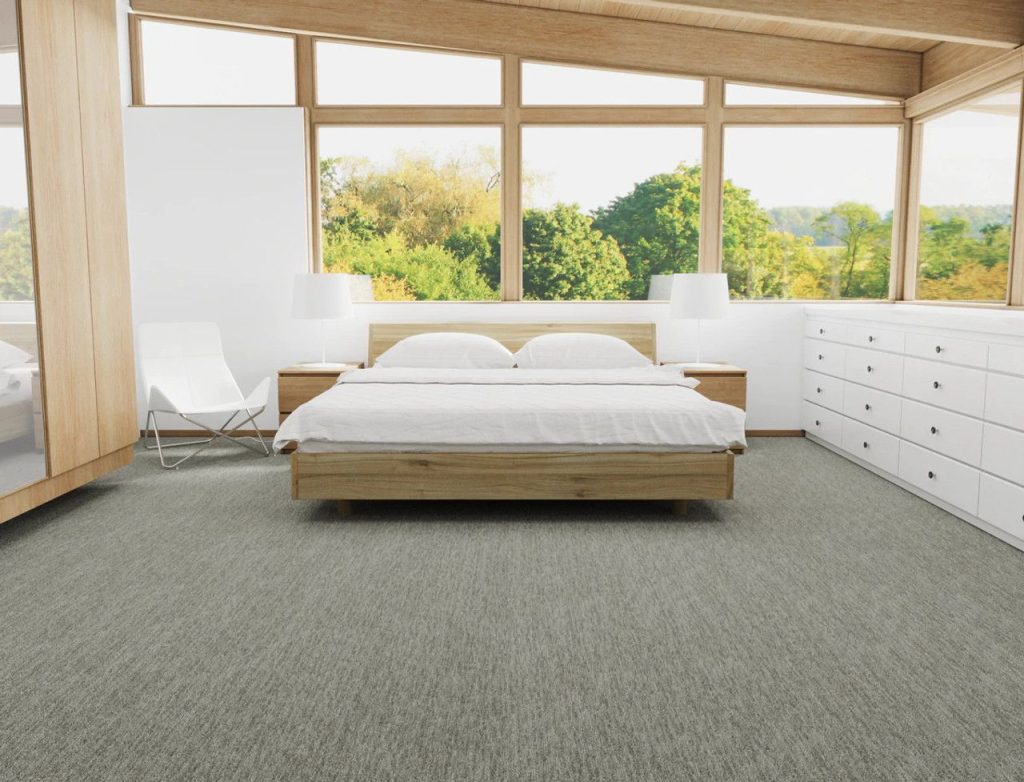
With proper care, most quality carpet lasts 10 to 20 years. The actual number comes down to two things: the carpet you select and how consistently you maintain it. Vacuum twice a week, get professional cleaning every 12 to 18 months, and pair your carpet with quality padding — and you’ll get close to the top of that range.
Quick Facts
- Entry-level carpet: 5–8 years. Mid-grade: 8–12 years. Higher-end: 12–20 years — with reasonable maintenance in all cases
- Quality padding can add 2 to 3 years to a carpet’s functional life compared to a low-grade cushion under the same product; our carpet padding guide covers what to look for
- Professional cleaning every 12–18 months can extend carpet life by 2 to 4 years by removing deep-set dirt and oils that slowly break down fiber structure
- Bedrooms last longest — quality bedroom carpet can reach 15 years with basic maintenance; hallways and stairs show wear in 5–8 years even with a good product
- In Texas, twice-weekly vacuuming isn’t excessive — dusty conditions in DFW and dry periods leave fine particulate that grinds down fibers faster; see our Texas carpet maintenance guide for specifics
Signs It’s Time to Replace
- Fibers that stay flat after vacuuming — permanent compression that cleaning can’t fix
- Visible walk paths that no longer respond to professional cleaning — fiber structure is breaking down
- Persistent odors after deep cleaning — contaminants have likely reached the padding or subfloor
- Stains that won’t clear after professional treatment — patching one room may make more sense than full replacement
How to Get the Most Out of Your Carpet
- Match fiber to room traffic — nylon for high-traffic spaces, solution-dyed polyester for bedrooms; our carpet fiber comparison covers the trade-offs
- Don’t underinvest in padding — it’s the most underestimated factor in lifespan
- Vacuum twice a week in active households and address spills immediately
- Use UV-blocking window treatments in sun-facing Texas rooms to prevent fading
Our Texas team brings samples to your home and will be upfront about what each product will realistically deliver for your household.
With proper care, most quality carpets last anywhere from 10 to 20 years. The actual number depends on two things: the carpet you select and how consistently you maintain it. Vacuum twice a week, schedule professional cleaning every 12 to 18 months, and choose a carpet with appropriate density for your household, and you’ll get close to the top of that range. Skip the maintenance and buy entry-level carpet, and you’ll likely be replacing it in 5 to 7 years.
What Affects Carpet Lifespan the Most?
Three factors drive how long carpet holds up: fiber quality, padding, and maintenance. Get all three right and your carpet can perform well for a long time. Compromise on any of them and lifespan shrinks accordingly.
Fiber quality determines how the carpet handles daily wear. Denser fiber construction bounces back from foot traffic better than lower face-weight products. Nylon holds up especially well in high-traffic rooms because of its natural resilience. Solution-dyed polyester holds up well in lighter-traffic rooms and resists staining at a high level. You can compare how different fibers perform in our carpet fiber comparison guide.
Padding is the part most homeowners underestimate. Good padding absorbs impact, supports the carpet fibers from underneath, and significantly extends overall lifespan. According to flooring industry research, quality padding can add 2 to 3 years to a carpet’s functional life compared to a low-grade cushion under the same product. Our carpet padding guide covers what to look for in each tier.
Maintenance is the most controllable factor, and it makes a measurable difference. Professional cleaning every 12 to 18 months can extend carpet life by 2 to 4 years by removing the deep-set dirt and oils that slowly break down fiber structure. Regular vacuuming removes the abrasive particles that grind against fibers during foot traffic, which is what causes that flattened, worn-path look over time.
How Long Does Carpet Last by Quality Tier?
Here’s a realistic breakdown of what to expect at different price and quality levels:
| Carpet Tier | Typical Lifespan | Best For |
|---|---|---|
| Entry-level | 5 – 8 years | Rental properties, short-term situations |
| Mid-grade | 8 – 12 years | Active family homes, bedrooms, and living rooms |
| Higher-end | 12 – 20 years | Low-to-moderate traffic, long-term ownership |
These ranges assume reasonable maintenance. A high-end carpet in a bedroom with two adults and no pets, vacuumed regularly and professionally cleaned on schedule, can hit the upper end of 20 years. The same product in a busy family room with dogs and three kids will perform differently.
When CarpetNow’s team helps you select a carpet, we’re honest about what each product will realistically deliver in your home. There’s no reason to oversell a product that won’t match your actual traffic level, and no reason to talk you into a higher tier than what your situation requires.
Does Room Location Change Lifespan?
Significantly, yes. Where carpet is installed matters as much as what’s installed.
Bedrooms see the least traffic and tend to be where carpet performs best over time. It’s not unusual for a quality bedroom carpet to reach 15 years with basic maintenance. Hallways and stairs are the opposite. They absorb constant directional traffic and often show visible wear within 5 to 8 years, even with a quality product. Living rooms fall somewhere in between, typically in the 8 to 12 year range, depending on family size and activity level.
This is one reason many Texas homeowners do a mixed approach: carpet in bedrooms and media rooms where comfort matters most, and hard surface in higher-traffic main living areas. That combination tends to optimize both lifespan and cost.
What Are the Signs It's Time to Replace?
Knowing when to stop maintaining and start replacing is as important as knowing how to maintain. The clearest signals:
Fibers that stay flat after vacuuming indicate permanent compression in the pile. Once fibers lose their resilience, cleaning can’t restore them. Visible walk paths or traffic lanes that no longer respond to professional cleaning are a sign that the fiber structure is breaking down. Persistent odors that don’t clear after deep cleaning often mean contaminants have reached the padding or subfloor. At that point, cleaning the carpet surface doesn’t solve the problem. Stains that won’t budge despite professional treatment are a judgment call: if it’s one room and the rest of the house is in good shape, patching or replacing that room may make more sense than a full replacement.
Our guide to knowing when carpet should be replaced goes deeper on each of these indicators if you’re trying to decide whether you’re at that point.
Can You Extend Carpet Life in a Texas Home, Specifically?
Texas presents a couple of specific challenges. Sun exposure through large windows and sliding doors fades carpet fibers faster than in other climates. Using blinds or UV-blocking window treatments in sun-facing rooms makes a real difference over time.
Texas also means dusty conditions in many markets, particularly in the DFW area and West Texas, where dry periods leave fine particulate that settles into carpet fibers. Twice-weekly vacuuming in those conditions isn’t excessive; it’s practical. You can read more in our Texas carpet maintenance guide for region-specific tips.
Ready for Carpet That Actually Lasts?
If you’re in Austin, Dallas, Fort Worth, Houston, San Antonio, or anywhere across Texas and you’re thinking about new carpet, CarpetNow will help you find the right product for your timeline and budget. We’ll be upfront about what each option will realistically deliver, so there are no surprises three years in. We come to you, help you pick what works, and handle the full installation in a single visit. Schedule a free in-home consultation, and let’s find something built to last.
