



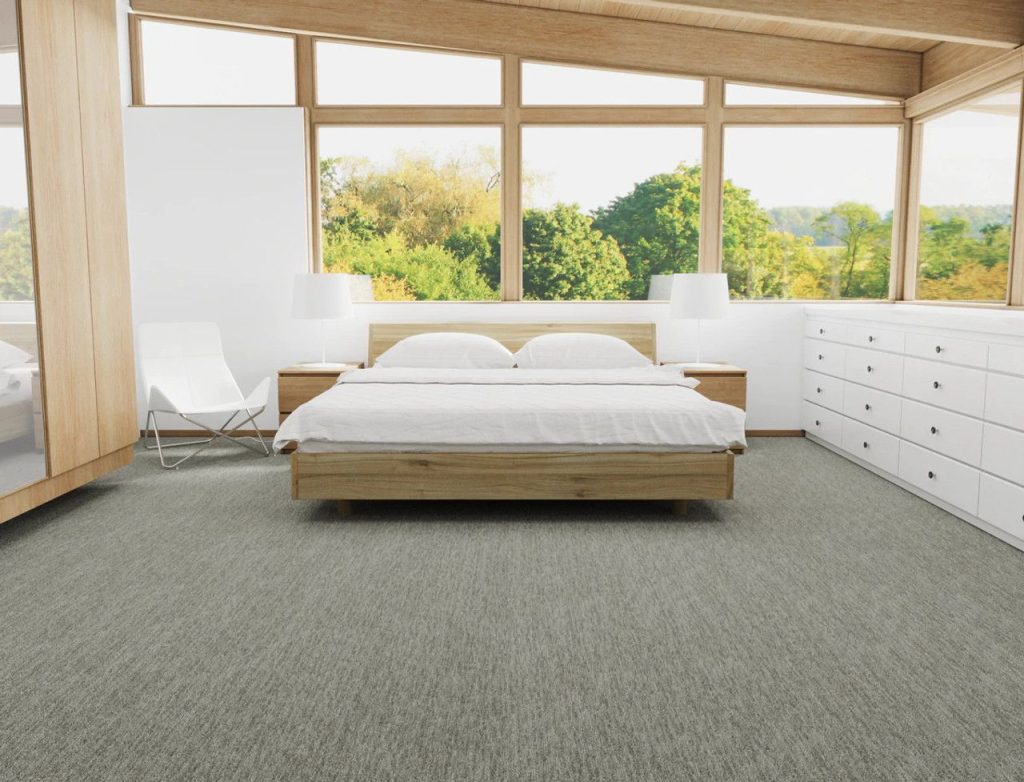
It depends entirely on the type of carpet. A tight, low-pile carpet like a Berber or patterned loop actually helps with allergies — allergens settle on the surface where your vacuum removes them. A thick frieze or shag carpet does the opposite. Allergens sink deep into long fibers, get trapped, and become much harder to clean out. The carpet type matters more than whether you have carpet at all.
Quick Facts
- Consistent vacuuming removes 90–95% of dry soil from carpet by weight — but only works effectively on low-pile styles where allergens stay near the surface
- The American Lung Association specifically flags shag and high-pile carpet as having higher allergen levels due to particles sinking beyond vacuum reach
- Hard floors don’t trap allergens — they recirculate them into the air with every footstep, which is why low-pile carpet can actually improve indoor air quality compared to hard surfaces
- Keeping indoor humidity between 30–50% discourages dust mites — your AC handles this when you stay in the 60–80°F comfort range
- CRI Green Label Plus certified carpet tests for low VOC emissions — important for allergy and asthma households
Best Carpet Choices for Allergy Sufferers
- Low-pile Berber or level loop — tight construction keeps allergens on the surface where weekly vacuuming removes them; use our carpet selection guide to compare pile heights
- Synthetic fibers — nylon or polyester — resist moisture and mold, don’t provide a food source for dust mites, and clean thoroughly
- Quality pad with moisture barrier — prevents allergens and moisture from building up under the carpet where mold can develop; see our full carpet padding guide for what to look for
- Avoid frieze and shag — long fiber constructions bury allergens beyond effective vacuum reach and create ideal conditions for dust mites
If allergies are a concern in your household, the right carpet choice makes a real difference. Our Texas team brings samples directly to your home so you can compare pile heights and fiber types in person before committing to anything.
It depends on what kind of carpet you put in. A tight, low-pile carpet, like a Berber or patterned loop, actually helps with allergies because allergens settle on the surface where your vacuum can pick them up. A thick frieze or shag carpet does the opposite. Allergens sink deep into those long fibers, get trapped, and become much harder to remove.
So the answer isn’t “carpet is bad for allergies.” The answer is “the wrong carpet is bad for allergies.”
How Does Low-Pile Carpet Actually Help With Allergies?
This is where most people get surprised. Carpet acts as a passive filter in your home. Dust, pollen, pet dander, and other allergens land on the carpet surface and stay there instead of floating around in the air you breathe. The Carpet and Rug Institute explains that properly cleaned carpet traps allergens and removes them from the breathing zone, and that studies have shown people with asthma and allergies have seen symptoms improve with carpet in their homes.
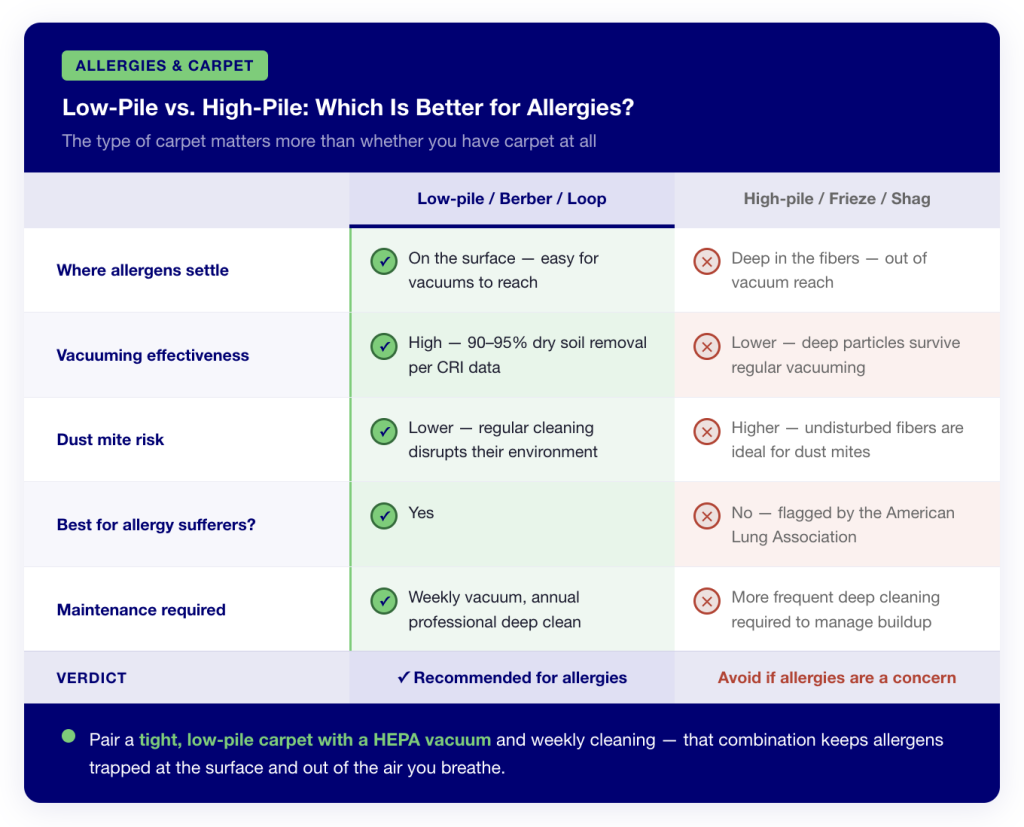
The key phrase there is “properly cleaned.” A tight-woven carpet with a low pile height keeps those allergens sitting right on top of the fibers. When you vacuum once a week, you’re pulling them out. The CRI notes that consistent vacuuming removes 90-95% of dry soil from carpet by weight. That’s a pretty effective cleaning rate.
Compare that to hard flooring, where allergens sit loose on the surface and get kicked back into the air every time someone walks across the room. That’s one of the reasons carpet can actually improve indoor air quality compared to hard surfaces. With hard floors, you’re breathing that stuff in. With low-pile carpet, it’s trapped and waiting for your vacuum.
Why Is Thick Carpet Worse for Allergies?
The American Lung Association specifically calls out shag and other high-pile varieties as having higher levels of pollutants and allergens. The reason is simple physics: longer fibers create more space for particles to sink down into. Once allergens get buried an inch or more deep in a frieze or shag carpet, your vacuum can’t reach them effectively.
Over time, that buildup gets worse. Dust mites thrive in environments where they have food sources (dead skin cells, pet dander) and aren’t being disturbed by cleaning. A thick carpet that traps allergens deep in its fibers creates exactly that environment.
Here’s how the two types compare:
What Carpet Style Should Allergy Sufferers Choose?
If anyone in your household deals with allergies, stick with these guidelines:
Go with a low-pile, tightly woven carpet. Berber, level loop, and tight-cut pile patterns are your best options. The denser the construction, the less space allergens have to burrow into.
Pick synthetic fibers. Nylon and polyester are both naturally resistant to moisture, mold, and mildew. They don’t provide a food source for dust mites the way some natural fibers can, and they’re easier to clean thoroughly.
Look for CRI Green Label Plus certification. The CRI’s Green Label Plus program tests carpet, cushion, and adhesive products for low VOC emissions. New carpet that meets this standard won’t off-gas chemicals that could irritate your respiratory system.
Pair it with a quality carpet pad that includes a moisture barrier. This prevents allergens and moisture from getting trapped underneath the carpet where mold could develop.
How Should You Maintain Carpet if You Have Allergies?
The right carpet only works if you take care of it. Here’s what the research supports:
Vacuum at least once a week in every room, and more often in high-traffic areas or homes with pets. Use a vacuum with a HEPA filter, which traps fine particles instead of blowing them back into the air. The EPA recommends HEPA filtration as one of the most effective ways to manage indoor allergens.
Get a professional hot water extraction cleaning once a year. This reaches allergens that vacuuming alone can’t get, and the heat kills dust mites. The CRI recommends professional cleaning every 12-18 months as part of a complete carpet care routine.
Keep your indoor humidity between 30-50%. Dust mites need moisture to survive. In Texas, that means running your AC and keeping your home in that 60-80 degree range where your system manages humidity effectively.
Ready to Pick the Right Carpet for Your Home?
If allergies are a concern in your household, we can help you find a tight, low-pile carpet that works with your home and your health. We bring samples directly to you so you can see and feel the difference between pile heights before you decide. Schedule a free in-home estimate and we’ll walk you through the best options for your family.
