


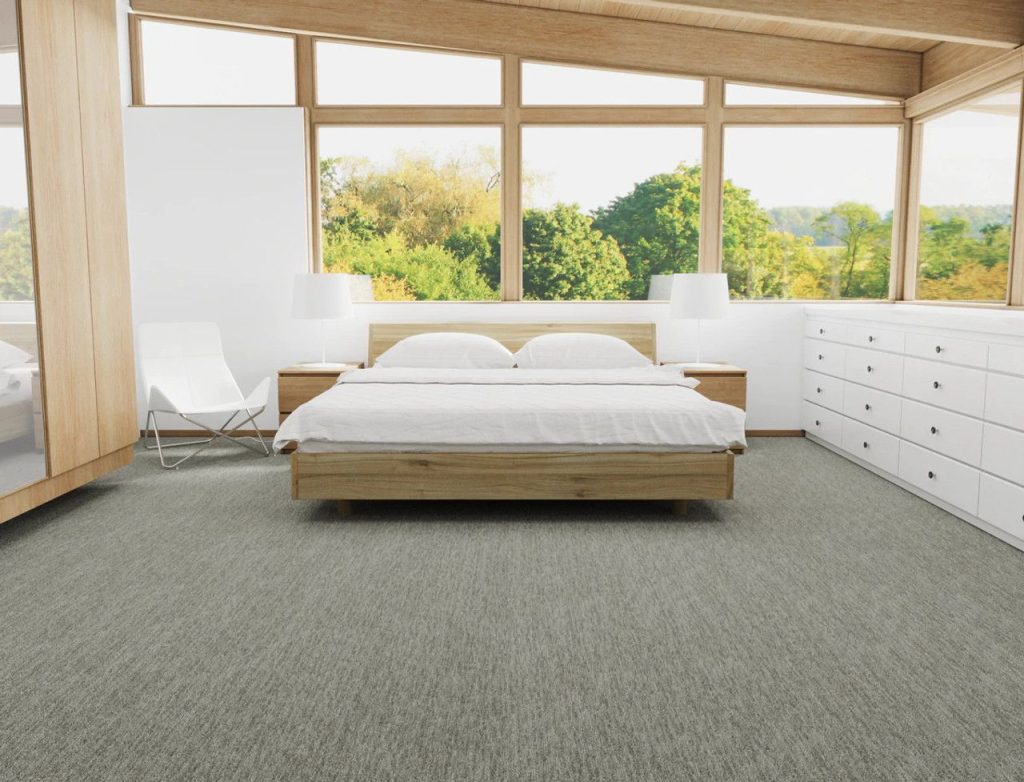
Contrary to popular belief, carpet can actually be better for allergy sufferers than hard flooring. Hard floors let dust, pet dander, and pollen become airborne every time someone walks through the room. Carpet traps those particles in the fibers until you vacuum them away — keeping them out of the air you’re breathing. The key is choosing the right style, looking for Green Label Plus certification, and maintaining it consistently.
Quick Facts
- The Carpet and Rug Institute confirms carpet keeps allergens out of the breathing zone — and notes that research on carpet and asthma management does not support recommendations to remove carpet
- Low-pile and short-loop styles are best — allergens stay near the surface where your vacuum can reach them, rather than getting buried in longer fibers
- High-pile and frieze styles create more surface area for particles to hide — a maintenance challenge for allergy households
- Green Label Plus certified carpet has been independently tested for low VOC emissions and is recognized by the EPA, LEED, and the American Lung Association’s Healthy Home program
- For pet allergies specifically, low-pile nylon handles repeated vacuuming better than polyester over time without matting; our best carpet fibers for high-traffic areas guide covers the durability trade-offs
What to Look for When Choosing Carpet for Allergies
- Low-pile or short-loop construction — see how pile height and fiber type compare in our carpet fiber comparison guide
- Green Label Plus certification on carpet, padding, and adhesive — covers all three components of the floor system, not just the face fiber
- American-made construction — many options CarpetNow carries meet Green Label Plus standards; mention air quality concerns when you schedule and we’ll point you to those specifically
- Consistent maintenance — twice-weekly vacuuming with a HEPA filter and professional cleaning every 12–18 months; our carpet maintenance guide and ways to clean your carpet guide cover the routine in detail
- Right fiber for your household — explore options before your visit with our carpet variants guide
Schedule your free in-home estimate and let us know about any allergy concerns — we’ll bring the right samples and steer you toward the best options for your household.
Contrary to what most people assume, carpet can actually be better for allergy sufferers than hard flooring. Hard floors let allergens like dust, pet dander, and pollen become airborne every time someone walks through the room. Carpet traps those particles in the fibers until you vacuum them away, keeping them out of the air you’re actually breathing. The key is choosing the right style, looking for low-VOC certification, and maintaining it consistently.
Why Carpet Can Be Better Than Hard Floors for Allergies
This is the part that surprises most people. The intuition is that carpet holds allergens and hard floors don’t — but that’s not quite right. Hard floors don’t trap allergens; they let them settle on the surface and become airborne again every time there’s foot traffic, a breeze from an HVAC vent, or even someone sitting down nearby.
Carpet acts as a passive filter. Particles land in the fibers and stay there until they’re vacuumed. The Carpet and Rug Institute confirms that carpet improves indoor air quality, specifically by keeping particles out of the breathing zone, and notes that studies on carpet and asthma management do not support recommendations to remove carpet. This is consistent with research published in the Journal of Allergy and Clinical Immunology, which CRI cites in its indoor air quality resources.
That said, carpet only works this way if you vacuum regularly and choose a style that’s easy to clean thoroughly. The wrong carpet — or the wrong maintenance routine — can undermine that benefit.
What Carpet Style Works Best for Allergy Sufferers?
Low-pile and short-loop styles are the best choices. These constructions keep allergens closer to the surface where a vacuum can reach them, rather than allowing particles to become embedded deep in longer fibers where they’re harder to remove.
High-pile and frieze styles look soft and comfortable, but the long, loose fibers create more surface area for particles to hide. If someone in your household has seasonal allergies, pet allergies, or asthma, low-pile carpet gives you the filtering benefit without the maintenance challenge of deeper pile.
The CRI’s carpet selection guide recommends asking about Green Label Plus carpet, cushion, and adhesive options if allergies or VOC concerns are a factor in your home. That’s exactly what we’d recommend too.
For a full breakdown of how fiber type and pile construction affect performance in different household conditions, the CarpetNow fiber comparison guide covers the main options and what each handles best.
What Is Green Label Plus and Why Does It Matter?
Green Label Plus is the Carpet and Rug Institute’s indoor air quality certification for carpet, padding, and adhesives. Products that carry the Green Label Plus seal have been tested by an independent laboratory and meet the industry’s highest standards for low VOC emissions.
VOCs — volatile organic compounds — are chemicals that can off-gas from carpet and other building materials and contribute to poor indoor air quality. New carpet does off-gas some VOCs, but the Carpet and Rug Institute notes that these emissions are short-lived and dissipate quickly with ventilation, and that Green Label Plus carpet brings those levels down even further. The program is recognized by the EPA, the U.S. Green Building Council’s LEED standard, and the American Lung Association’s Healthy Home program. The CRI’s dedicated Green Label Plus page explains the full certification process and what the independent testing covers.
Many of the American-made carpets CarpetNow carries meet Green Label Plus standards. During your in-home consultation, mention if chemical sensitivities or air quality are a concern, and we’ll point you specifically toward those options. If you want to explore the available carpet options before your visit, our carpet variants guide breaks down fiber and construction types side by side.
How Important Is Vacuuming and Cleaning?
Critical. Carpet’s air quality benefit depends entirely on the particles you trap actually being removed. If allergens sit in the carpet fibers indefinitely, the benefit erodes.
For allergy households, twice-weekly vacuuming is the standard recommendation. Use a vacuum with a HEPA filter, which captures fine particles rather than recirculating them. The Carpet and Rug Institute’s cleaning and maintenance guidelines recommend professional cleaning every 12 to 18 months to remove what regular vacuuming can’t reach.
CarpetNow’s carpet maintenance guide covers routine care in more detail, and the ways to clean your carpet guide walks through what regular upkeep actually looks like week to week.
Does Carpet Type Affect Pet Allergy Specifically?
Yes. Pet dander is smaller and lighter than most household dust, which makes it particularly prone to becoming airborne on hard floors. The carpet holds it in place until vacuumed.
For homes with pets, low-pile nylon is generally the best combination of allergen control and durability. Nylon handles repeated vacuuming and cleaning better than polyester over the long run without matting down. The CarpetNow guide to best carpet fibers for high-traffic areas goes deeper on fiber performance if you’re weighing options.
The FTC reminds consumers that product certifications like Green Label Plus are the clearest signal of independently verified performance claims — rather than relying on marketing language alone when choosing carpet for a health-sensitive household.
If you or someone in your home has allergies, let us know when you schedule. Book your free in-home estimate, and we’ll bring the right samples and steer you toward the best options for your situation.
